

Eskom tests this technology daily
Inverter fridge repairs in Gauteng
Tripping, humming, warm since the lights came back? Inverter fridges were built for smooth, stable power, and Gauteng doesn't always supply it. We diagnose the board and the compressor properly, across the province, before you pay for the wrong part. We repair every major brand, including Hisense, Defy, KIC, Samsung and Electrolux, with same-day call-outs across Roodepoort, Kempton Park, Bedfordview and the wider Gauteng metro.
Stage 6 meets sensitive electronics
Built for stable power, sold into a country that doesn't have it
Almost every fridge sold in South Africa over the past decade is an inverter fridge, whether or not the badge shouts about it. The technology is genuinely better: quieter, gentler on the electricity bill, steadier on temperature. But it was engineered for a wall socket that delivers clean, uninterrupted power, not for Stage 6, for a grid that drops out twice a day and slams back with a spike on the line. Here, that's just Tuesday.
So the most common reason a modern fridge lands on our bench has nothing to do with the fridge being badly made, it's the collision between delicate control electronics and a brutal supply. The outage itself rarely does the damage; your fridge sits there cold and patient in the dark. The harm arrives on restoration, when a voltage transient travels down the wire into your kitchen looking for the most fragile thing to land on. On an inverter fridge, that's the driver board.
This is the load-shedding page on our site, other pages mention Eskom in passing; this one owns it, because no fridge format is as exposed to the rhythm of stages, surges and backup power. If your unit also has a touchscreen, app or Wi-Fi acting up, our smart fridge repairs page handles the software side. Here, we stay on the power, the board and the compressor: the three things load-shedding actually breaks.
Variable speed, explained plainly
Why an inverter fridge sips power and runs so quietly
An old-fashioned fridge has one trick: the compressor is either off or flat-out. The thermostat clicks it on, it roars until the cabinet is cold, then clicks off. That stop-start cycle is why a traditional fridge thumps, swings in temperature, and draws a hard kick of current at every launch. Simple, robust, thirsty.
An inverter fridge does something cleverer. Instead of one fixed speed, it runs the compressor at variable speed, fast after a warm month-end load, then dropping to a slow, almost idle murmur once the cabinet settles. Running slow and steady uses far less energy, holds a tighter temperature band, and barely makes a sound.
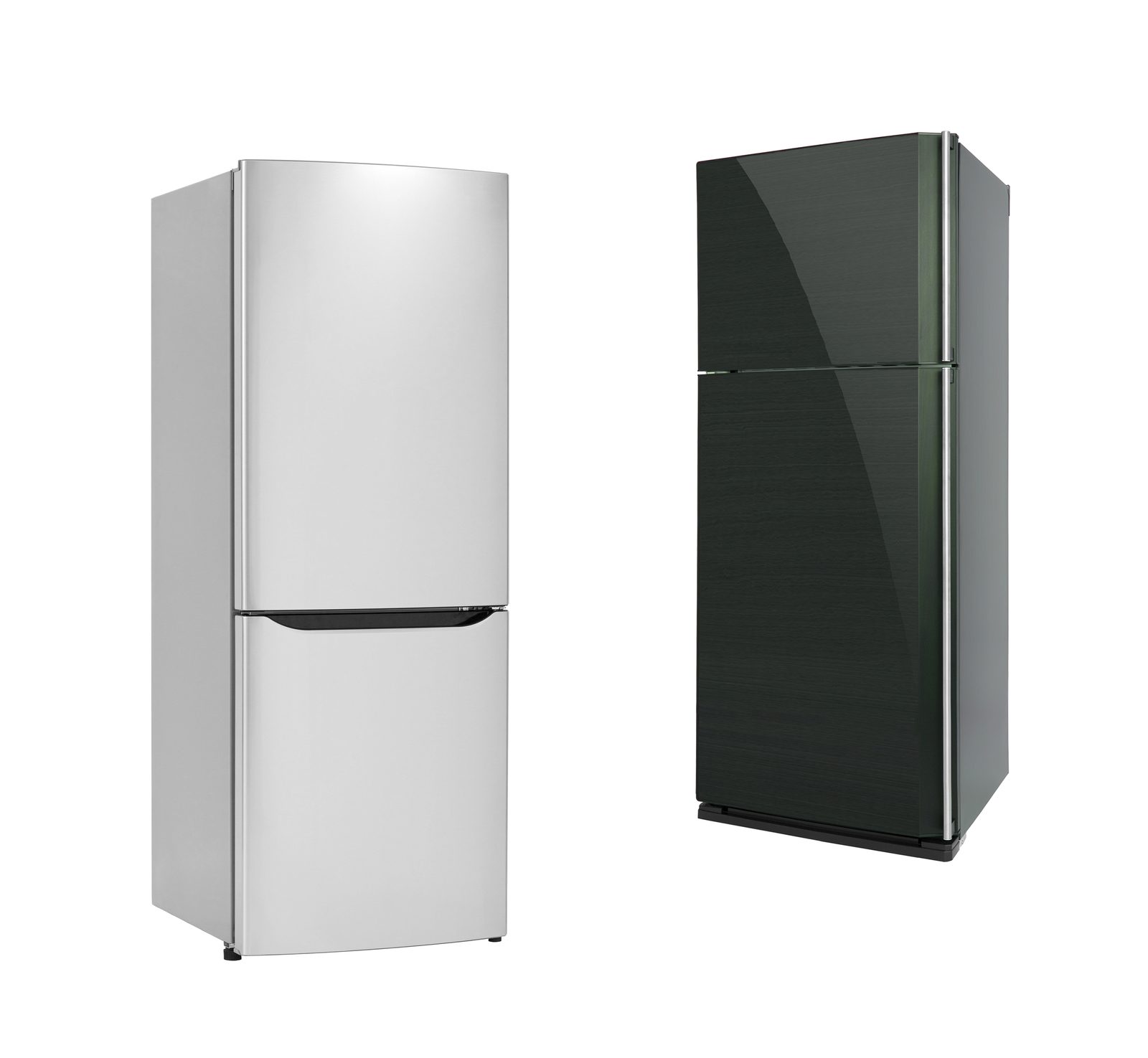
The clever part is the driver board, an inverter PCB that acts as the brain and the throttle in one. It takes your incoming mains, converts it, and feeds the compressor a precisely shaped, variable-frequency supply that sets the speed moment by moment. The compressor is the muscle; the board is the mind. And that's the catch: the cleverness lives in the electronics, exactly what a power surge goes looking for, a target a 1990s fridge never offered.
The signature problem
The most expensive mistake in fridge repair
Here's the costly trap, and it catches owners and technicians alike. On an inverter fridge, the board and the compressor fail with almost identical symptoms, a unit that hums but won't cool, trips the plug the second it tries to start, or sits dead after load-shedding. From the kitchen, you cannot tell them apart. Yet the two repairs are worlds apart in cost: a driver board is one kind of money, a variable-speed compressor another entirely.
So this is where money gets wasted. A board gets condemned as a compressor, someone quotes a full compressor replacement when the real fault was a damaged board costing a fraction to fix. Or the reverse: a new board goes in, the fridge runs a week, then fails again because the compressor was never touched. Guess wrong either way and you pay twice.
There's only one way to avoid that, and it isn't a hunch, it's testing in the right order. We check what the board is doing: is it powering up, is it commanding the compressor to run? Then we measure the compressor directly, winding resistance, shorts to the body, whether it answers a start command. A dead board and a dead compressor give different readings on a meter, even when they sound identical.
If you've already been told you need a new compressor and the number made you wince, get a second opinion before you sign anything. We're glad to test a unit another firm has quoted on, sometimes we confirm it, sometimes we find a board fault hiding behind a compressor quote. Either way you'll know, and a diagnosis call is far cheaper than the wrong part. It's the same disciplined approach we bring to every case of fridge compressor failure, prove it before you replace it.
What load-shedding actually breaks
The eight inverter faults we trace most often
After fifteen-plus years and a province full of stages, certain failures repeat. Knowing them won't fix your fridge, but it'll tell you why guessing is dangerous, and what we're measuring for when we arrive.
- Surge-killed driver boards, the headline fault, and far and away the most common reason a modern fridge dies overnight. The transient that rides in on restoration finds the inverter PCB and damages a component: the compressor is fine, but the brain is concussed.
- Compressor winding faults, the muscle itself fails: a winding goes open or shorts to the body. Often the end of a long, hard life; sometimes the cost of being forced to start against pressure during rough power. This is the genuinely expensive fault, which is exactly why it must be confirmed, not assumed.
- Start failures after an outage, when power returns, the compressor has to start against the pressure still in the system. A healthy board manages it; a tired one, or a compressor already on the edge, can't quite launch, so you get the click-and-fail with no cooling.
- Error-code blink patterns, many inverter fridges flash a fault through the panel light or display. The rhythm points at a sensor, a fan, or a board-to-compressor fault. The code is a generation-specific starting clue, never the whole answer.
- Fan and PCB interplay, the board commands the evaporator and condenser fans too. A seized fan or a failed board output can starve the cabinet of airflow, so the top shelf is icy and the door shelves warm even though the compressor sounds fine.
- Slow cooling stuck at low speed, the inverse of a healthy fridge. If the board loses its ability to ramp the compressor up, it idles at low speed and never pulls the cabinet properly cold, especially after a big load-in.
- Backup-power compatibility quirks, a fridge that ran perfectly on Eskom but trips, hums oddly or won't cool the moment it's on the home inverter. The board is reacting to the shape of the backup power, not to a fault in the fridge.
- A change in the noise, the quiet murmur turning into a constant, harder drone usually means the board has dropped out of variable-speed control and is driving the compressor flat-out, or the compressor is straining. The change is the symptom.
Notice how many sound the same from a metre away, the whole argument for measuring before replacing. If your unit isn't powering up at all, our broader guide to a fridge that's not working is a useful first read before you call.
What helps, what's marketing
Surge protection that earns its place, and the bits that don't
Once you understand that the surge on restoration is the killer, the obvious question is how to stop it. The shelves are full of devices that promise to, and they're not all equal. Two genuinely useful tools get muddled together on neighbourhood WhatsApp groups, so let's separate them.
- A real surge protector clamps a voltage spike before it reaches the fridge. One with a proper surge-suppression rating, not just the words on a cheap multiplug, gives the driver board a fighting chance against the transient that arrives when the line goes live.
- A fridge-guard or delay timer does a different job: it holds the compressor off for a few minutes after power returns, so it doesn't start against high system pressure. That protects the compressor and start components, not the board. Many homes benefit from both, because they guard against two separate kinds of damage.
- The marketing trap is the cheap adaptor that says "surge protected" with no rating worth the ink. A protector with no real clamping capacity is just a plug with a sticker.
No device makes an inverter fridge immune, anyone promising that is selling you something. But the right combination genuinely lowers the odds of the morning-after fatality, and that's a sensible spend in this country. When we diagnose a surge-damaged board, we'll point you at protection that suits your unit.
Pure sine versus modified sine
Running the fridge on a home inverter or generator: the honest version
Half of Gauteng has bought backup power, and the fridge is usually first on the list to keep running. Good plan, with one detail that catches people out: an inverter fridge cares not just how much power you feed it, but about its shape. Mains arrives as a smooth, rounded wave, and the driver board expects that smoothness.
A pure sine wave inverter, or a quality generator, reproduces that wave faithfully, and the fridge runs exactly as it does on Eskom. A modified sine wave inverter, usually the cheaper option, delivers a rough, stepped approximation. To a kettle that's fine; to the sensitive board driving a variable-speed compressor, that roughness can confuse the control, make the compressor run hot or noisy, or trip the unit. A fridge that ran perfectly on the grid but sulks on backup power is usually telling you it doesn't like the waveform.
So if you're sizing backup power with the fridge in mind, the guidance is plain: choose pure sine, and rate it for the start-up surge rather than only the running watts, because a compressor draws a hard kick when it launches.
Diagnosis-led, every time
How we prove the fault before we replace a thing
Because the board and compressor are so easy to confuse, our process proves the fault before any part is fitted. Five steps, in order, every time:
Take the history
Book by phone, WhatsApp or the form above and tell us the story: brand, what it's doing, whether it died during or after load-shedding, and whether it's on backup power. Any blink code is gold, count the flashes and photograph the display.
Power and board check
On site, we confirm the fridge is getting clean power, then test the driver board: is it alive, is it commanding the compressor to run? A concussed board reveals itself here before we touch anything expensive.
Measure the compressor directly
We test the compressor on its own terms, winding resistance, shorts to the body, whether it answers a start command. This is the step that settles the board-or-compressor question with numbers, not a hunch.
Quote the real fault
Only once the fault is proven do we quote, in writing, with the call-out fee already known from booking. You'll hear plainly whether it's a board, compressor, fan, sensor or start component, and what each option costs before you decide.
Repair and verify down to temperature
We fit the correct part, board outputs matched, compressor confirmed, refrigerant only recharged after the leak is found, never as a guess, then watch the cabinet pull down on a thermometer and back the work with a written guarantee.
That order is the difference between a repair that lasts and a part that gets binned. Inverter fridges are a steady part of our residential fridge repair rounds across Johannesburg, Pretoria, Midrand and the East Rand, and the same crew answers the after-hours emergency line when a fridge dies on a month's worth of food.
Different names, same physics
Digital, Smart, Linear: the badges differ, the failure logic doesn't
Every brand has its own marketing name for the same idea. Samsung calls it Digital Inverter, LG calls it Smart Inverter or Linear, and Hisense, Defy and Bosch each have their version. Strip the badge away and the engineering rhymes: a control board feeding a variable-speed compressor a shaped supply, with the same handful of ways to fail. A surge kills a Samsung board the same way it kills an LG one. What changes is the part itself, board part numbers are generation-specific, so the right replacement depends on the exact model and year, not just the brand on the door. That's why we identify the unit precisely before sourcing a board.
One last brand-side honesty: the long compressor warranty. Many inverter fridges advertise a ten-year warranty on the compressor, and owners reasonably assume that means a free repair. Read the terms, those warranties typically cover the compressor part and often nothing else: not the labour to fit it, not the refrigerant to recharge the system, and not the driver board, which is the part most likely to actually fail. Exclusions vary by brand, so we'll diagnose the real fault first, and you'll know exactly what your warranty does and doesn't carry before you spend a cent. Samsung and Hisense units are common enough on our rounds that we cover them on their own pages too, see our Samsung fridge repairs and Hisense fridge repairs.
Keep the board breathing
Small habits that help an inverter fridge ride out the stages
You can't bulletproof an inverter fridge, but you can stack the odds. Fit real surge protection plus a delay timer or fridge-guard, so both halves of the machine are covered. Keep the condenser coils at the back or base clean, a board that can't shed heat runs hotter, and leave a hand's width behind the cabinet for airflow.
When the lights come back, give the fridge ten minutes before you judge it, and don't flick it on and off, that helps nothing and stresses the compressor. And the most useful habit costs nothing: notice the sound. The day the quiet murmur becomes a constant drone is the day to call, while it's still a board fault and not yet a cooked compressor.
The questions load-shedding raises
Inverter fridge questions from Gauteng homes
My inverter fridge is dead since the power came back. What now?
A fridge that survived the outage but died when power returned was almost certainly bitten by the surge that rides in as Eskom re-energises the line, and that lands on the most delicate part: the driver board. First, switch it off at the wall, wait ten minutes, then switch it back on; a clean restart clears some lock-out states. If it stays dead, stop there, flicking it on and off won't revive a damaged board. Note any blinking light, then book a diagnosis. The fault is usually the electronics, not the compressor, and the two cost very different money.
There's a light blinking on the front. Does that mean something specific?
Often, yes. Many inverter fridges report faults through blink patterns or short codes on the panel, so many flashes for a sensor, a different rhythm for a fan. The pattern is a clue, not a verdict, and it's generation-specific, so the same count can mean different things on different models. Count the blinks, photograph the panel, and tell us when you book. It narrows our diagnosis, but we still confirm the real fault with instruments, not the code alone.
Is it the board or the compressor, and how do you actually tell?
By testing, not guessing, that's the whole point of this page. The board and the variable-speed compressor fail with overlapping symptoms: both can leave a fridge that hums, trips the plug or won't get cold. We check the board's outputs and measure the compressor windings for resistance and shorts, establishing whether the board is commanding a compressor that won't answer, or has stopped commanding at all. Skip that order and you risk fitting a costly compressor to cure a cheap board fault, or the reverse. We test first, quote second, every time.
Will my home inverter or generator run an inverter fridge safely?
Usually, with one caution: the shape of the power matters. Inverter fridges expect a clean, smooth waveform, a pure sine wave, which a good home inverter or quality generator delivers, so the fridge runs happily. A cheap modified-sine inverter delivers a rough, stepped approximation, and that roughness can confuse the driver board, make the compressor run hot or noisy, or trip the unit. If you're sizing backup power, choose pure sine and rate it for the start-up surge, not just the running watts.
Do those plug-in surge protectors actually work?
Some help, some are mostly marketing, and none are magic. A plug-in surge protector with a genuine surge-suppression rating gives the fridge a fighting chance against the spike that arrives when power is restored, that's worthwhile. A fridge-guard or delay timer is different: it holds the compressor off for a few minutes after power returns, protecting it from a different kind of damage. The two do different jobs, and a cheap adaptor that only claims protection on the box often does neither. We'll tell you which device suits your unit and which is wishful thinking.
Inverter fridges are meant to be quiet, so why is mine humming?
Because the sound of an inverter fridge tells a story. A variable-speed compressor usually murmurs at a low, steady speed, which is why these fridges feel so quiet. A new, louder, more constant hum often means the board has lost the ability to vary the speed and dropped the compressor to a fixed, harder-working mode, or the compressor is straining against a fault. A rattle, by contrast, is usually a fan or loose panel. The change in sound is the symptom worth reporting, not the volume on day one.
My fridge has a ten-year compressor warranty, so the repair is free, right?
Not so fast, this trips a lot of owners up. Those long compressor warranties usually cover the compressor part itself, and often only that: not the labour to fit it, not the refrigerant to recharge the system, and not the driver board that may be the real culprit. Read your own terms, because exclusions vary by brand. The part most likely to fail is the board, which the warranty rarely touches, and any claim still needs a correct diagnosis first. We diagnose honestly so you know exactly what is and isn't covered before you commit.
Related repairs and reading
Smart fridge repairs
Touchscreens, apps and Wi-Fi, the software side.
Compressor failure
When the muscle, not the board, is the fault.
Fridge not working
Dead, dark and not powering up at all.
Samsung fridge repairs
Digital Inverter models, diagnosed properly.
Hisense fridge repairs
Common newer inverter units, parts and faults.
All home fridge repairs
Every cold appliance in the house, one team.
Been quoted for a new compressor and not sure it's right? Book a diagnosis and we'll prove the fault before anyone replaces a part.
Brands, faults & areas
Inverter Fridge Repairs: the brands we repair and the Gauteng areas we cover
Fridge brands we repair
We service all the major makes sold in South Africa, from everyday models to premium, electronically controlled units: Samsung, LG, Defy, Bosch, Whirlpool, Hisense, Kelvinator, KIC, AEG, Smeg and Electrolux.
Common fridge & freezer faults we fix
Whatever the symptom, we diagnose it with proper instruments before we quote. The faults below are the ones we are called out for most.
Areas we serve across Gauteng
Same-day call-outs across Johannesburg, Pretoria and the wider metro, from Sandton and Midrand to the East Rand. Find your area below.