

The fridge your kitchen was built around
Built-in fridge repairs in Gauteng
When a built-in column dies, you can't just buy another and wheel it into the gap, the whole kitchen was designed around it. We repair cavity-installed and column fridges in place across Gauteng, ventilation faults and all, without tearing up your joinery. We repair every major brand, including Hisense, Defy, KIC, Samsung and Electrolux, with same-day call-outs across Roodepoort, Kempton Park, Bedfordview and the wider Gauteng metro.
No easy swap
When a freestanding fridge dies you go shopping. When a built-in dies, the kitchen is held hostage
There's a freedom to a freestanding fridge that nobody appreciates until it's gone. It packs up, you measure the gap, and by the weekend a new one is humming in the same spot. A built-in column gives you none of that. It sits flush inside cabinetry that a kitchen designer drew around it and a cabinetmaker cut to the millimetre, matching cupboards above, a plinth below, a trim kit hugging its sides. It isn't an appliance dropped into the room. It's load-bearing furniture that happens to make cold.
That changes the whole conversation when it stops working. Replacing it means hoping a modern unit fits a cavity cut years ago, and if it doesn't, calling the cabinetmaker back to rework a surround that matched the rest of the kitchen. The bill stops being the price of a fridge and starts being the price of a partial kitchen renovation. So for a built-in, repair isn't one option weighed against replacement. Far more often, it's the option, the one that keeps the original unit in the slot it was made for and leaves the joinery untouched.
The good news is that built-in columns are eminently repairable, and a surprising share of their faults trace back to one cause we'll keep returning to on this page: heat with nowhere to go. Get the airflow right and these are machines that earn their place for a long time. This page walks through how built-ins differ, what goes wrong inside the cabinet, and how we fix it without leaving a mark on your kitchen.
Boxed in
A fridge in a box inside a box: why the cabinet changes everything
Every fridge makes cold by moving heat. The compressor and condenser take warmth from inside the cabinet and dump it into the room. A freestanding fridge does this in open air, heat rolls off the back coil and drifts away into the kitchen. A built-in column does exactly the same work, but it's sealed inside a wooden box. The heat it produces has to escape through deliberate openings, or it doesn't escape at all.
Those openings are the part of a built-in installation that owners never see and rarely think about:
- The plinth grille, a vent low down at the kickboard, where the fridge draws in cool air from floor level. This is the single most important hole in the whole installation, and it's also the one that fills with dust, pet hair, dropped crumbs and skirting offcuts.
- The top exhaust gap, an opening high in the surround that lets the heated air, now lighter than the room, rise up and out above the cabinet.
- The rear channel, a clear air path up the back of the cavity that connects the two, so warm air can actually climb from the plinth to the top instead of pooling behind the unit.
- The trim kit, the brand's framing that fixes the fridge into the opening and, when fitted correctly, preserves those airflow gaps rather than sealing them shut.
When that path works, a built-in breathes easily and runs as designed. When any link in it is blocked, a grille choked with fluff, a cabinet built too tight, a trim kit that closed the gaps, the fridge ends up breathing its own exhaust. Heat that should have left the cabinet circles back into the condenser, and the machine is asked to make cold while sitting in a warm cupboard. Trapped heat is the number-one silent killer of built-in fridges in this country, and almost every fault below is either caused by it or made worse by it.
Quick clarification
Built-in or integrated? One looks like a fridge, the other looks like a cupboard
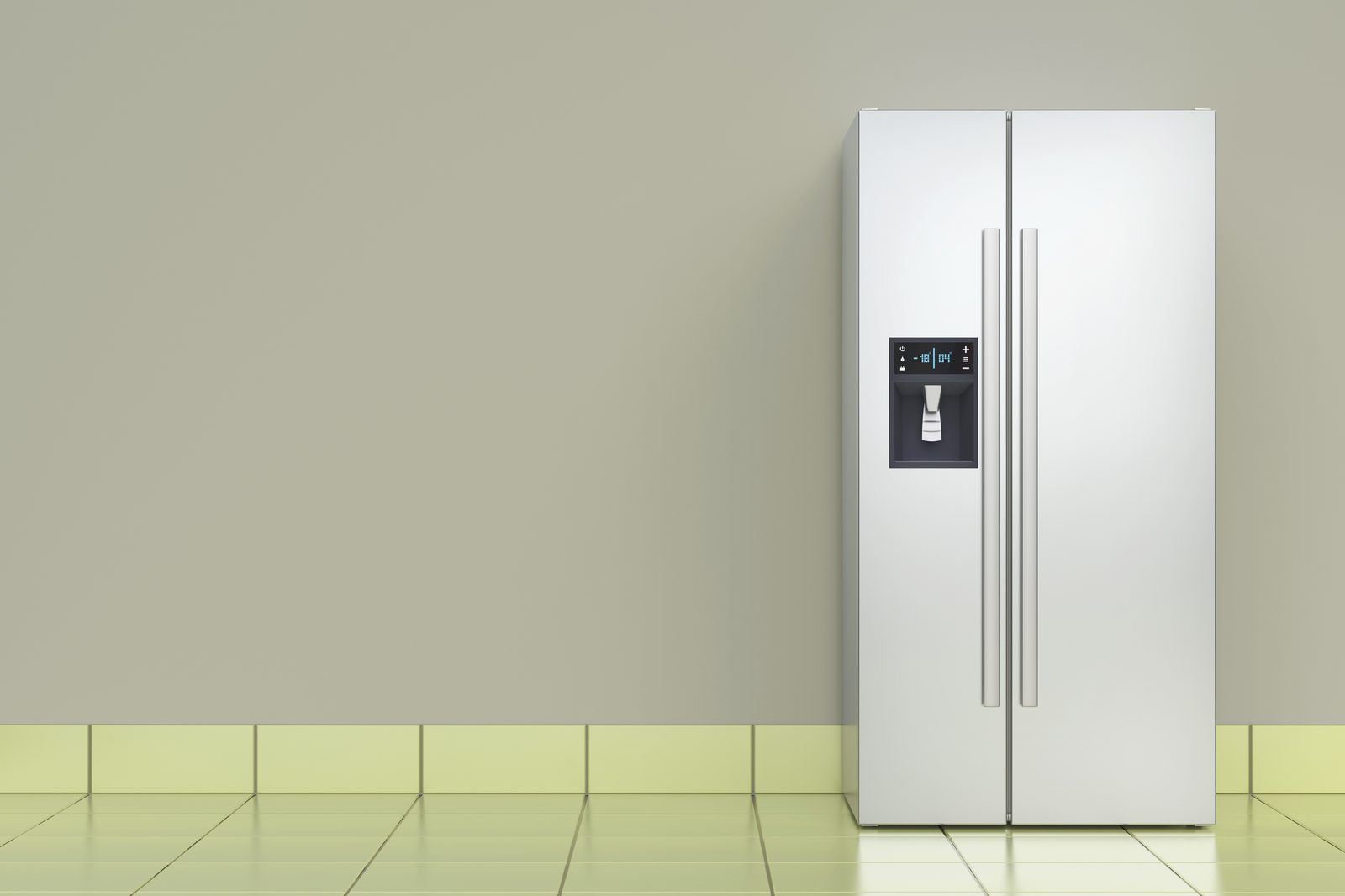
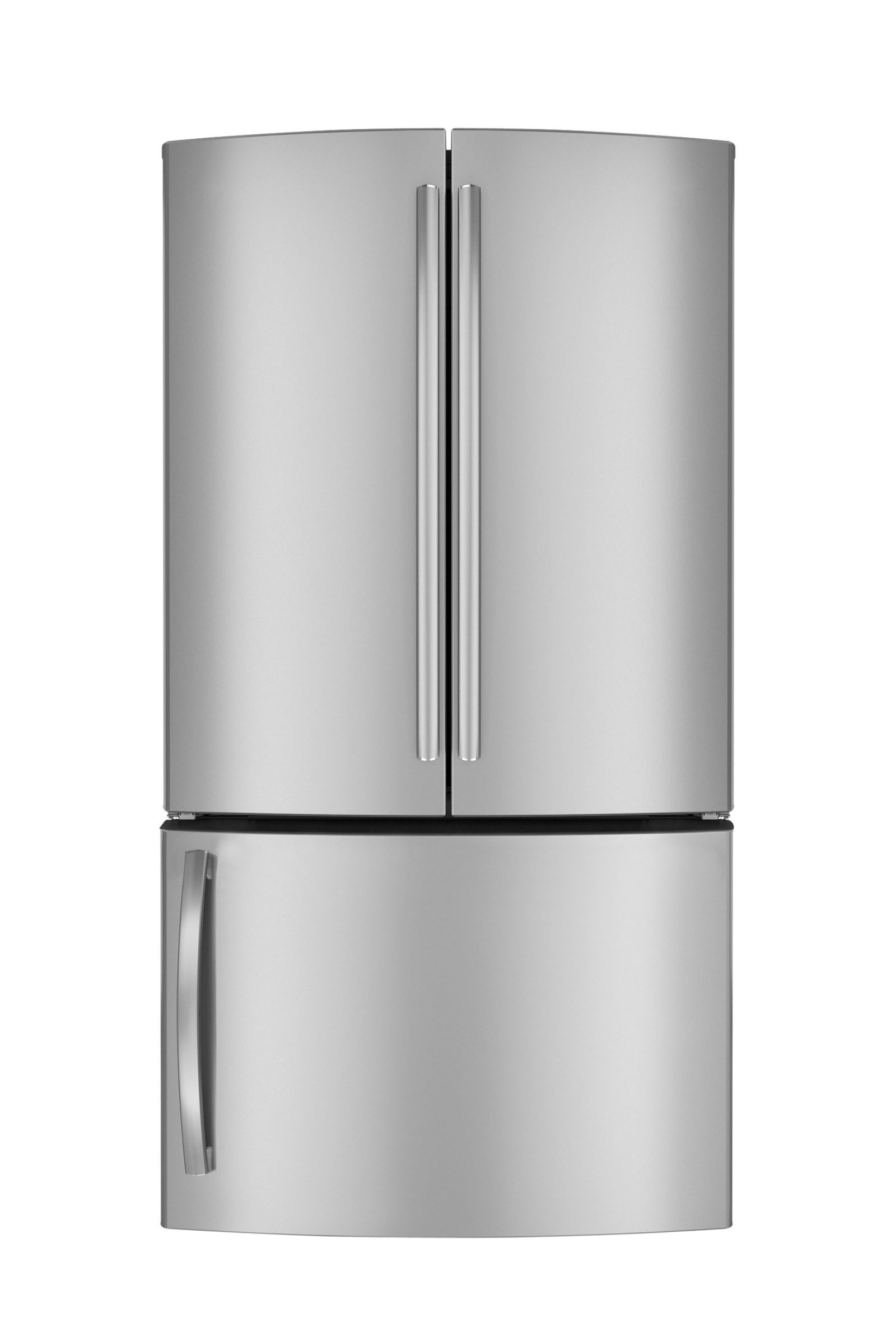
People use the two words interchangeably, and they shouldn't, because the repairs differ. A built-in fridge, the kind this page is about, sits inside cabinetry but keeps its own face: you walk into the kitchen and you can see a fridge, a stainless or finished front with the brand's own handle, framed by surrounding cupboards. An integrated fridge hides completely behind a furniture door that matches your kitchen cupboards, so you can't tell it's there at all; its whole party trick is a wooden cabinet door hung onto the fridge with a special hinge system. If the front you look at is a fridge, you're on the right page. If it's a cupboard door that opens to reveal a fridge, the faults and fixes are different enough that they have their own home, see our integrated fridge repairs page, which covers the furniture-door hinges and the apartment-spec units in detail. Both share the trapped-heat problem; only one has a cupboard door bolted to its front.
What we actually find
The eight faults that bring us to a built-in column
After fifteen-plus years opening up cabinetry across the northern suburbs and beyond, the faults sort into a recognisable list. Notice how many of them lead back to the same culprit, heat that couldn't get out:
- Overheating from a blocked plinth vent, the headline fault. The grille at the kickboard clogs, the condenser can't pull cool air, and the whole unit overheats. It runs longer, cools worse, and slowly bakes everything else on this list. Clear the vent and half our built-in call-outs are solved on the spot.
- Condenser dust in a sealed cavity, a freestanding fridge's coil sits in the open where a vacuum can reach it. A built-in's condenser hides inside the cabinet, gathering a felt of dust nobody ever cleans, until it can't shed heat at all. The dust and the trapped air compound each other.
- Thermostat and electronics cooked by trapped heat, control boards and temperature sensors are happiest cool. Live them in a warm cabinet for a few summers and they drift, glitch or fail outright. We see boards that aren't faulty so much as heat-fatigued.
- Door gasket wear hidden by the trim, on a freestanding fridge you'd spot a perished seal. On a built-in, the trim kit and surrounding cabinetry hide the gasket, so a leak runs for months unnoticed, frosting the evaporator and dragging the temperature up while the compressor labours.
- Drainage faults behind the cabinetry, the defrost drain that carries melt-water away can block or freeze, and on a built-in the resulting puddle has nowhere obvious to show itself. Water can track under the unit and into the cabinet floor before anyone notices a problem.
- Compressor strain from the heat load, a compressor asked to work in a warm cabinet runs hotter and longer than its designers intended. That shortens its life, and a tired compressor is the most expensive part on the machine. Most built-in compressor failures we see were avoidable airflow problems first.
- Lighting and control panels failing, LED strips, touch panels and display modules on premium columns are sophisticated and, again, heat-sensitive. A dead light or an unresponsive panel is annoying rather than fatal, but it's frequently the first visible sign that the cabinet runs too hot.
- Door alignment against the cabinetry, a built-in door has to clear the surrounding cupboards perfectly. Settle the hinges, a knocked unit or a sagging door, and it catches on the joinery, won't self-close, and leaves itself ajar, which ices the unit and warms the food.
If your built-in simply isn't getting cold at all, the underlying mechanism is the same as any fridge, our guide to a fridge making noise is a good companion read, because a built-in straining against trapped heat usually announces itself with sound long before the temperature climbs.
Working inside the joinery
How we repair a column without wrecking the kitchen around it
The fear every built-in owner carries is reasonable: that fixing the fridge means dismantling the cabinetry it lives in. It almost never does. The faults that bring us out, clogged grilles, dusty condensers, worn gaskets, blocked drains, dead panels, are reachable from the front or the plinth, and that's where we start. Book by phone, WhatsApp or the form at the top of this page, tell us the brand and what the unit is doing, and we'll bring the right approach to your door, with the call-out fee quoted upfront and a written quote before any work begins.
Protect the carcasses first
Before anything else, we cover the surrounding cabinet faces and the floor. Built-in joinery is expensive and finished to match a whole kitchen, we treat it the way the cabinetmaker would, not the way a freestanding repair lets you get away with.
Diagnose from the front and the plinth
We pull the kickboard grille, check the condenser and the airflow path, inspect the gasket and drain, and read the electronics with proper instruments. A large share of faults are confirmed and fixed without the unit moving a millimetre.
Decide honestly whether it has to come out
Some faults, a sealed-system repair, a rear-mounted component, genuinely need the column eased out of its cavity. If yours is one of them, we say so before we start, explain why, and slide it free the proper way so the cavity sides aren't scuffed.
Repair in place, from van stock where we can
Common wear parts for the popular brands ride on the van. We replace gaskets, fans, thermostats, drain components and control modules in situ wherever the part allows, keeping the cabinet open for only as long as the job demands.
Know when the kitchen fitter is the right call
We're refrigeration technicians, not joiners, and we'll tell you the difference. If a trim kit was fitted wrong or a cavity was built without ventilation, fixing it properly may need your kitchen fitter alongside us. We're blunt about where our work ends and theirs begins.
Reinstate the airflow and verify the cold
Before we leave, we make sure the vents are clear and breathing, slide the unit back square in its cavity, check the door clears the cabinetry, and confirm the fridge is pulling down to temperature with a thermometer rather than a hopeful guess.
The maths of the cavity
Why replacing a built-in costs more than the fridge does
With a freestanding fridge, repair-versus-replace is a clean sum: the cost of the fix against the cost of a new machine. A built-in scrambles that arithmetic, because replacement is never just the fridge. The cavity was cut to fit one specific unit, and built-in dimensions have shifted over the years, heights, widths and trim standards have all moved. A column bought to replace one installed a decade ago can sit proud of the opening, fall short of it, or miss the width by enough to matter. The moment the new unit doesn't drop cleanly into the old hole, you've added a cabinetmaker to the project.
That carpentry is where built-in replacements quietly run away with the budget. Reworking a surround to match a kitchen finished years ago can mean new trim, a refaced plinth, sometimes a section of cabinetry rebuilt, and matching an older finish is rarely cheap or quick. Against all of that, a repair keeps the unit the cavity was sized for, leaves every panel where it stands, and costs a fraction of the renovation. We measure the cavity, look at the fault honestly, and if the unit truly is beyond saving we'll say so plainly, but on a built-in, the scales tip toward repair far more often than they do on a fridge you could simply wheel away. For the wider picture on home appliances, our residential fridge repair hub lays out the rest.
European cabinet royalty
The built-in brands behind Gauteng's joinery
The built-in column market in this country is overwhelmingly European, Miele, Siemens, AEG, Liebherr and Smeg dominate the cavities of renovated and high-spec kitchens, with Bosch close behind. They're genuinely well-built machines, and that's worth saying clearly: when one fails early here, the cause is far more often the closed, hot cabinet it was installed into than any weakness in the appliance itself. Parts are importable for all of them, and for common items the wait is short; for rarer brand-specific electronics, lead time runs a week or two, and we'll tell you honestly before you commit. The recurring theme across every one of these names is the same, most faults we fix are heat-management problems, not component quality.
The plinth grille ritual
One small habit that adds years to a built-in
If you do nothing else for your built-in fridge, do this: clean the plinth grille. That vent at the kickboard is the unit's mouth, and it sits at floor level inhaling everything the kitchen drops, dust, crumbs, hair, the fluff that gathers in any home. Once a season, pop the grille off (most clip or screw away in seconds), and vacuum both the grille and the condenser behind it until the airflow is clear. In a busy household, every couple of months is better. This one ritual prevents the overheating that causes most of the faults higher up this page.
A few habits round it out. Don't let anyone seal up the ventilation gaps in the name of a tidier finish, those gaps are doing essential work, and a closed-up cabinet in a sun-baked Bryanston or Fourways kitchen is exactly where premium columns go to overheat. Wipe the door gasket with warm soapy water now and then so it stays supple and seals true, since a hidden leak behind the trim is hard to spot and easy to prevent. And in the depths of a Highveld summer, when the kitchen itself runs hot, give the fridge a hand by not jamming the cabinet shut against the heat, a kitchen that breathes helps the fridge inside it breathe too. None of this is hard. It just has to be remembered, because a built-in won't nag you the way an open fridge does.
Owners ask us
Built-in fridge questions from Gauteng kitchens
My built-in fridge runs constantly inside its cabinet. Is that normal?
No, a healthy fridge cycles on and off, even a built-in one. A column that never rests is fighting heat it can't get rid of, and inside a sealed cabinet that's the most common reason of all. The grille at the plinth or the gap at the top has usually choked up with dust and fluff, so the condenser is breathing its own warm exhaust instead of cool room air. Less often it's a refrigerant leak or a tired thermostat. Constant running is the symptom that costs you twice: a heavier electricity bill now, and a compressor worn out early. It's also quick for us to diagnose, because trapped heat leaves an obvious fingerprint.
Can a built-in fridge be repaired without removing it from the cabinet?
Most of the time, yes. The faults we see most often, a clogged plinth grille, a dust-blanketed condenser, a worn door gasket, a blocked drain, a dead control panel, are all reachable through the front or the plinth without disturbing a single cabinet panel. We work in place wherever we can, protecting the joinery as we go. A unit only has to come out when the fault sits at the very back, such as a sealed-system repair, and even then there's a right way to slide a column free of a tight cavity. If yours needs to move, we tell you before we touch it and explain exactly why.
Our kitchen was built around the fridge twelve years ago. Will a new unit still fit the cavity?
Possibly, but don't assume it. Cavity dimensions and the height of built-in columns have drifted over the years, and a fridge bought to replace a twelve-year-old one may sit a few centimetres proud, short or wide of the opening your cabinetmaker cut. That gap turns a simple swap into a carpentry job, new trim, sometimes a reworked surround. Against that, a repair keeps the original unit in the cavity it was sized for, with no joinery touched. That's a big part of why repair, not replacement, is usually the sensible first move with a built-in. We measure and advise honestly before you spend on either path.
Why do premium built-in fridges seem to fail early in South Africa?
It's rarely the appliance's quality, these are well-made machines. It's the heat-management trap they're installed into. A built-in lives in a closed cabinet, and that cabinet has to breathe through grilles and gaps that owners can't see and never clean. Add a closed-up northern-suburbs kitchen baking under a Highveld summer, a condenser smothered in dust, and a sealed cavity, and a fridge engineered for a cool European utility room is asked to dump its heat into an oven. The electronics and compressor cook slowly. Fix the ventilation and the same unit often runs happily for years more, which is why so many of these repairs are about airflow, not parts quality.
Are parts for European built-in fridges available locally, or is there a long wait?
It depends on the part. Common wear items for the popular brands, door gaskets, fan motors, thermostats, control modules for the better-selling models, we either carry or source within a day or two. Genuine sealed-system and brand-specific electronic components for the rarer European columns are a different story: those are imported, and an honest lead time is a week or two, sometimes more. We'd rather tell you that upfront than promise a same-day miracle we can't keep. Often the fault turns out to be heat-management or a common part anyway, so the long wait simply never happens.
Should the cabinet around a built-in fridge have ventilation gaps?
Yes, absolutely, and it's the detail that gets skipped most often. Every built-in column needs a clear air path: cool air drawn in low at the plinth, warm air pushed out high at the top of the surround, with a channel up the back of the cabinet so the heat can climb out. Skip the gaps, or block the plinth grille with skirting and dust, and the fridge slowly poisons itself with its own exhaust. If your cabinet was built tight with no breathing room, that's not a quirk to live with, it's the root cause of the running, the warmth and the early failure. We can usually open up the airflow during a visit.
Related repairs for fitted kitchens
Integrated fridge repairs
Panel-door fridges hidden behind furniture fronts.
Wine cooler repairs
Under-counter and built-in wine fridges.
Smart fridge repairs
Touch panels, connectivity and control boards.
Fridge making noise
The sounds trapped heat makes first.
All home fridge repairs
Every cold appliance in the house, one team.
Your kitchen was designed around this fridge, it's worth saving the right way. Book a built-in repair and we'll arrive ready to work inside the joinery, not against it.
Brands, faults & areas
Built In Fridge Repairs: the brands we repair and the Gauteng areas we cover
Fridge brands we repair
We service all the major makes sold in South Africa, from everyday models to premium, electronically controlled units: Samsung, LG, Defy, Bosch, Whirlpool, Hisense, Kelvinator, KIC, AEG, Smeg and Electrolux.
Common fridge & freezer faults we fix
Whatever the symptom, we diagnose it with proper instruments before we quote. The faults below are the ones we are called out for most.
Areas we serve across Gauteng
Same-day call-outs across Johannesburg, Pretoria and the wider metro, from Sandton and Midrand to the East Rand. Find your area below.